


New European waste rules: What businesses must prepare for in 2026-2027.
- Thu, September 18, 2025
- 2.5 Minuten Lesezeit
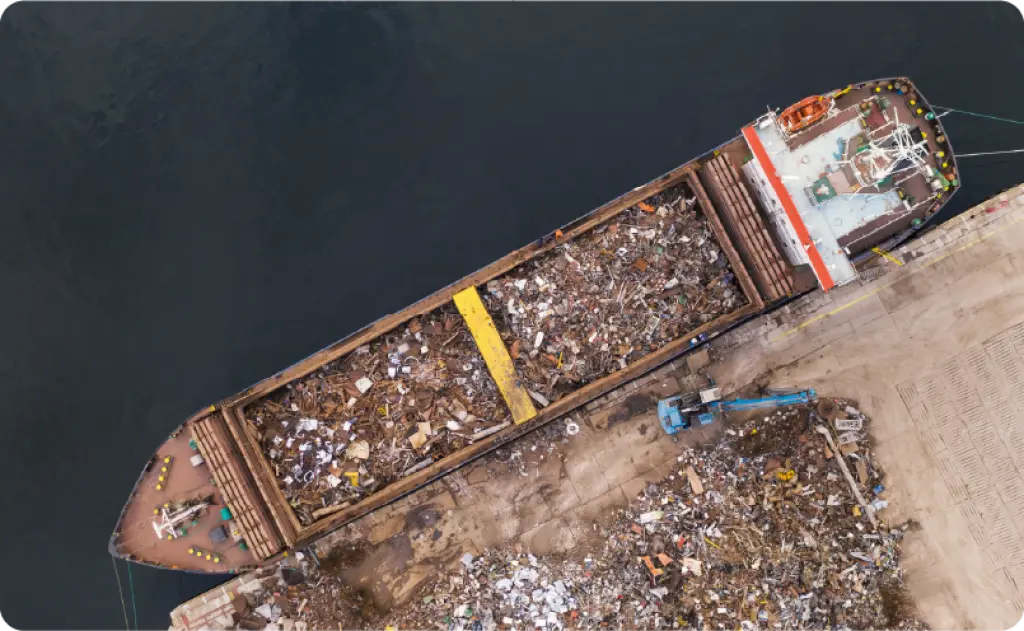
Waste Shipment Regulation (EVOA)
The European Waste Shipment Regulation – known in Dutch as EVOA – sets out rules for shipping waste within EU member states and to countries outside the EU. These rules vary depending on:
- The type of waste,
- How it will be processed, and
- Its final destination.
The regulation aims to:
- Prevent EU countries from offloading their waste problems onto third countries,
- Combat illegal waste shipments, and
- Improve traceability across the entire chain.
Key measures include:
- A ban on exporting plastic waste to non-OECD countries (from 21 Nov 2026).
- Stricter requirements for exports to OECD countries.
- A central EU electronic notification system (from May 2026).
Step-by-step process for EU waste shipment compliance
Companies that want to ship waste must act as the notifier and follow specific procedures. Depending on the type of waste, its processing method, and its destination, the shipment may fall under one of three categories:
- General information obligations.
- The notification procedure.
- A complete ban.
To make compliance easier, companies can use official rule aids that provide step-by-step guidance.
Step 1: Identifying the type of waste
To classify waste correctly, two questions must be answered:
- Is it classified as waste?
- What is the material, and how should it be categorised?
Waste is typically divided into:
- Green-listed waste (Annex III/IIIA/IIIB): generally non-hazardous; subject to information requirements.
- Waste subject to notification (Annex IV): often hazardous, but some non-hazardous materials also fall under this category.
Step 2: Determining the processing method
Next, the processing method must be established:
- Will the waste be recovered (e.g. recycled) or disposed of?
- What is the applicable EVOA code?
Step 3: Establishing the destination
Once the type of waste and the processing method are clear, the final destination must be identified. Shipments may fall under one of the following routes:
- Within the Netherlands.
- Within the EU.
- From the EU to a non-EU country.
- Into the EU from a non-EU country.
- Transit through the Netherlands.
EU waste shipment notification requirements
Notification starts in the country where the waste transport originates. This involves submitting an official document with a unique identification number.
In the Netherlands, the notification process is managed by the Inspectie Leefomgeving en Transport (ILT).
- The application process usually takes 3–4 months.
- Once complete, the dispatch authority issues a decision within 30 days.
- For shipments to a facility with VGI-status (vooraf goedgekeurde inrichting / pre-consented recovery facility), the decision period is shortened to 7 working days.
After approval, the originating country notifies all other nations involved in the transport.
Required annexes
The application must include:
- A financial guarantee.
- A contract between the notifier and the consignee.
- Details of the waste, the transport route, and the transporters.
Developments in European waste shipment law
- E-waste (WEEE): Since 1 January 2025, new control entries apply (A1181/Y49). Exports to non-OECD countries are prohibited, while exports to OECD destinations require prior informed consent.
- Digitalisation: From May 2026, all notifications and documents will move to a central EU electronic system. Interoperability rules were adopted on 2 July 2025 to prepare for this shift.
- Third-country listings: The older Regulation (EC) 1418/2007 system is being phased out; exports will instead follow the new EVOA architecture.
EU waste compliance: final thoughts and recommendations
By following these steps, companies can ensure their waste shipments are handled safely, responsibly, and in full compliance with the revised European regulations. The new EVOA rules underline the EU’s commitment to protecting health and the environment while promoting sustainable resource use. Preparing early is vital to avoid shipment delays, fines or blocked exports when the new rules start applying in 2026–2027.
EU waste regulation resources & official links
Verwandte Nachrichten und Artikel


Erhalten Sie unsere Expertenmeinungen und Zollinformationen direkt in Ihren Posteingang
Mit Ihrer Anmeldung erklären Sie sich damit einverstanden, dass Gaston Schul Sie über unsere relevanten Inhalte, Produkte und Veranstaltungen informiert. Sie können sich jederzeit abmelden. Weitere Informationen finden Sie in unserer Datenschutzrichtlinie.