News | 4.5 Minuten Lesezeit
From 1 January 2026, France will abolish Customs Procedure 42 , ending the VAT simplification that allowed goods to move across EU borders without upfront import VAT. The change affects non-EU importers such as those in the UK, Norway and Switzerland, who will need to register for French VAT. Although EU businesses are not directly affected, they should still review their operations to ensure smooth and compliant trade through France under the new rules.
Press | 3 Minuten Lesezeit
Gaston Schul, the largest privately owned customs service provider in Europe, today opened its doors in Frederikshavn, Denmark, marking its expansion into a ninth European country. The launch strengthens the company's Nordic presence and reinforces its commitment to remaining independent while the European customs service industry continues to consolidate.
Article | 3 Minuten Lesezeit
In recent years, we’ve seen a sharp rise in sanctions activity, and 2024 has been no exception. Between the evolving Russia sanctions, renewed measures on Iran, and increasingly complex EU and UK regulations, sanctions compliance has become a pressing concern for any business involved in international trade.
Article | 2.5 Minuten Lesezeit
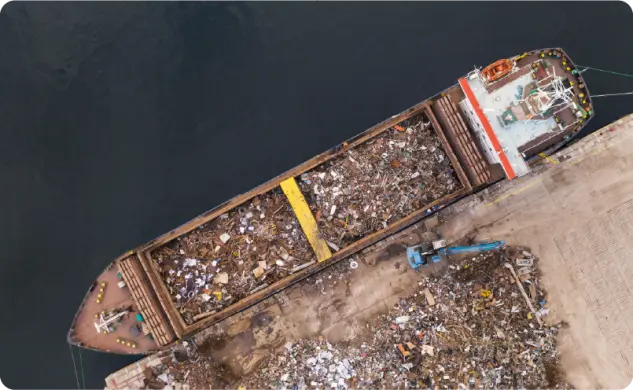
European waste regulations have existed since the 1990s, but in 2024 the EU adopted renewed procedures. The revised Waste Shipment Regulation (Regulation (EU) 2024/1157) entered into force on 20 May 2024. Most provisions will apply from 21 May 2026, while export rules will take effect from 21 May 2027. A specific ban on exporting plastic waste to non-OECD countries will apply from 21 November 2026. The main purpose of the new framework is to strengthen public health protection and foster a circular economy. But what does this mean in practice for companies?
In April 2025, the First-tier Tribunal handed down a decision in [2025] UKFTT 427 (TC) that should make every customs agent and importer sit up and take notice. The case involved 32 import declarations submitted under Postponed VAT Accounting (PVA) for a client whose VAT registration had already been cancelled – a costly oversight that led to over £1.1 million in VAT liability. This judgment provides critical insights into due diligence duties, authorisation requirements, and liability risks in the customs and trade sector.
When goods are imported into or exported from the European Union, a customs declaration must be submitted by the declarant, who is ultimately liable for all duties and obligations. To simplify this process, many businesses appoint a customs broker or representative to act on their behalf. This practice, known as representation, can take different forms, and choosing the right one is critical to ensuring compliance, minimising risks, and keeping supply chains efficient.
Article | 2 Minuten Lesezeit
Outward processing allows EU businesses to temporarily export goods for processing abroad and re-import them with reduced duties. In this article, we explain how the procedure works, how duties are calculated, and what businesses need to consider – including the impact of CBAM – to stay competitive and compliant.
B2B e-invoicing is already mandatory in some European countries and will be rolled out more broadly between 2026 and 2028 – yet many aren’t ready. The risk? Blocked invoices, delayed payments, and VAT penalties. In my conversations with clients, e-invoicing has become a recurring theme – what once sounded like a technical side issue has quickly become central to VAT compliance in Europe, and it’s something businesses can no longer afford to treat it as background noise.
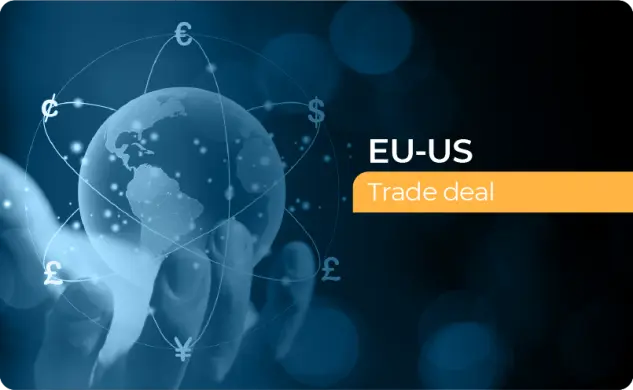
Talks about a new EU-US trade agreement are in full swing, yet people often forget that no formal, legally binding text exists. The White House did publish a fact sheet outlining the main headlines, but until a compromise is negotiated, approved and set down in EU and US legislation, the trajectory can still change in every direction.