Trade agreements create opportunities. Are businesses making the most of them?
- Tuesday, October 20, 2026
- 2.5 minute read
International trade agreements can offer businesses significant advantages, from improved market access to potential cost savings. Yet having access to these opportunities does not automatically mean they are being used.
This distinction is one of the broader lessons from the 2026 Hinrich-IMD Sustainable Trade Index. The research examines how 30 economies build the capacity to achieve sustainable growth through international trade. One of its key messages is that participating in trade frameworks is not enough: economies also need the institutions, infrastructure and capabilities to turn opportunities into results.
Although the Index focuses on economies rather than individual companies, it raises a relevant question for businesses trading internationally: are they making the most of the opportunities already available to them?
Access to trade agreements is only the beginning
Free trade agreements (FTAs) can offer reduced or zero customs duties for qualifying goods. For importers and exporters, this can create opportunities to lower costs and improve competitiveness.
However, preferential tariff treatment is not automatic. Products must meet the applicable rules of origin, and businesses need the appropriate information and documentation to support their eligibility.
For manufacturers sourcing components from multiple countries, this can be particularly challenging. Whether a finished product qualifies for preferential treatment depends on the specific origin requirements, not simply the country from which it is shipped.
Without a clear understanding of these conditions, businesses may overlook potential benefits or face compliance risks when claiming preferences incorrectly.
The opportunity may exist within a trade agreement, but realising it requires the right knowledge and processes.
Three questions worth asking
Making better use of preferential trade arrangements starts with understanding where opportunities exist and whether the business is equipped to pursue them.
Three questions offer a practical starting point:
- Are we using the trade agreements available to us? Identify which agreements may apply to your products and markets, and whether preferential treatment is being considered.
- Can we demonstrate that our goods qualify? Review origin determinations and check whether the necessary supporting information and documentation are available.
- Are customs considerations part of our commercial decisions? Consider how supplier selection, product changes and sourcing arrangements could affect eligibility for preferential treatment.
These questions help businesses move beyond treating customs solely as a requirement at the point of clearance. They also highlight the value of involving customs expertise earlier in procurement and supply chain decisions.
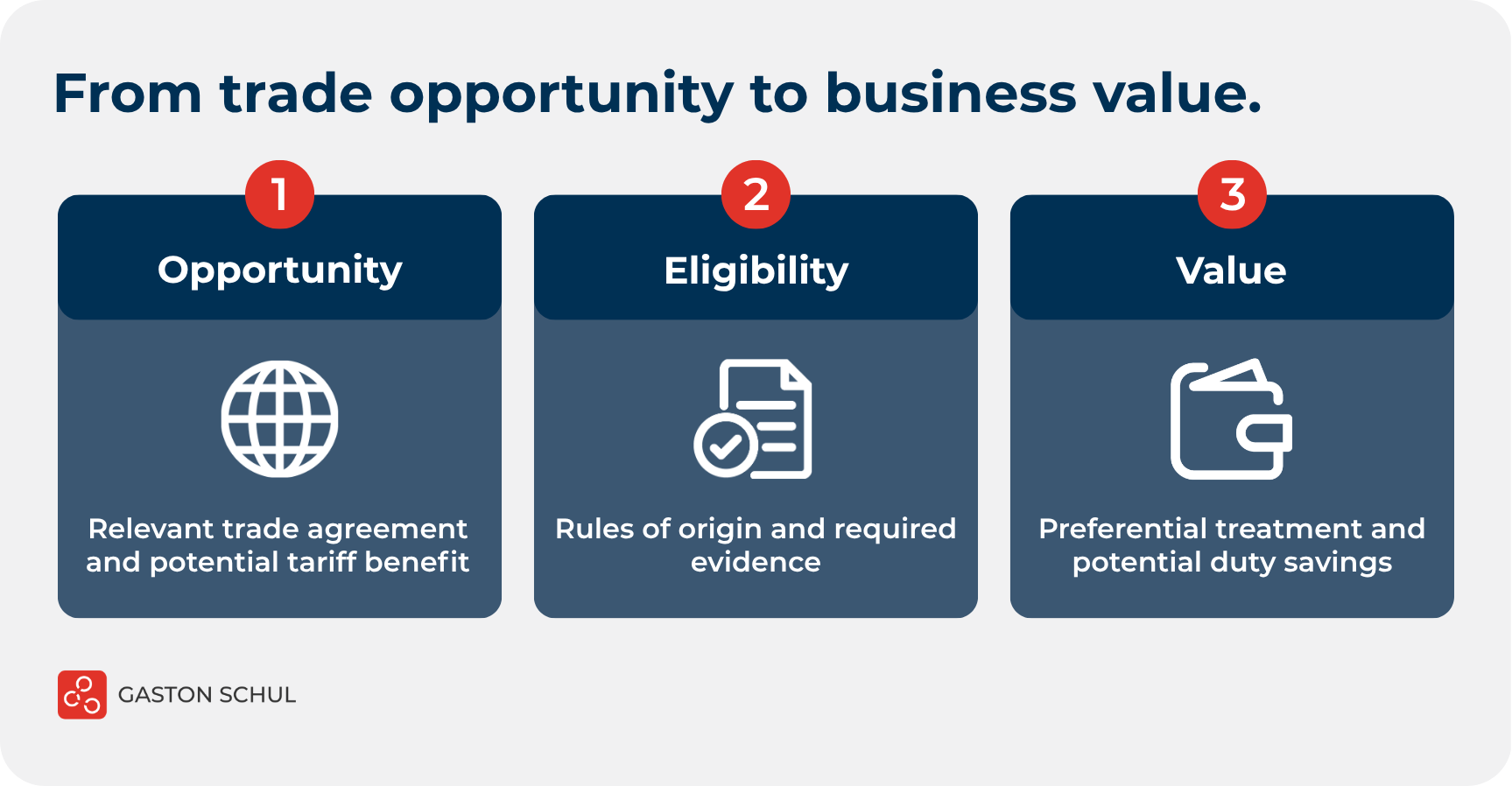
From customs compliance to business value
Customs is often viewed primarily as an operational necessity. Declarations must be accurate, documentation complete and goods cleared correctly. But customs knowledge can also contribute to broader commercial decisions.
Understanding preferential origin, reviewing tariff classifications and identifying opportunities for duty optimisation can help businesses make more informed choices about sourcing, costs and international trade flows.
At Gaston Schul, this broader perspective is part of our Customs & Trade Advisory services. We help businesses assess origin requirements, explore opportunities under free trade agreements and identify potential customs duty savings, with a focus on putting those insights into practice.
The 2026 Sustainable Trade Index provides a useful reminder that international trade success depends on more than the opportunities available. It also depends on the ability to act on them.
For businesses, that means looking beyond whether trade agreements exist and considering how effectively they are being used.
Trade agreements create opportunities. Turning them into business value requires the right knowledge, processes and decisions.