Article | 2.5 minuten leestijd
Switzerland is not simply updating a customs system. It is redesigning how customs data is submitted, processed and monitored.
Article | 3 minuten leestijd
Customs outsourcing is undergoing a fundamental transformation. For many years, decisions were primarily driven by cost savings and capacity considerations. If declarations were processed efficiently and volumes could be absorbed, the model was considered successful. That logic is no longer sufficient.
Article | 1.5 minuten leestijd
Across global trade, the role of customs is evolving rapidly. What was once treated as a transactional necessity is now influencing supply chain resilience, cost control, risk management, and commercial performance.
Article | 6 minuten leestijd
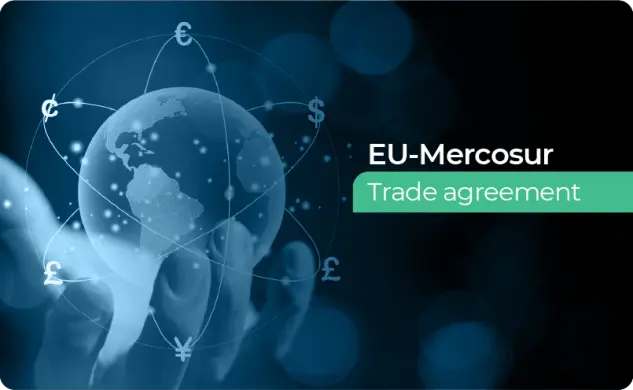
The EU–Mercosur agreement has the potential to reshape trade between Europe and South America, but its value will depend on operational readiness rather than political headlines. This article explains where the real commercial impact is likely to arise, what businesses should expect in practice, and how early preparation can turn preferential access into measurable advantage.
Article | 4 minuten leestijd
As AI reshapes customs procedures and digitalisation accelerates, the role of many people working in the field of customs is shifting as well. And this change can bring about feelings of anxiety and uncertainty. Does this mean the role of the customs broker is becoming redundant?
The European Commission has proposed a significant expansion of the Carbon Border Adjustment Mechanism, responding to lessons learned during the transitional phase. From 1 January 2028, CBAM is expected to apply to a much broader range of products, with implications across entire value chains. This article outlines the key elements of the proposal, the rationale behind the changes, and their expected practical impact for importers.
Article | 3.5 minuten leestijd
The customs world is moving faster than ever. As global trade faces constant geopolitical tension, new sustainability demands and sweeping digital transformation, customs has become a strategic function for both large logistics service providers and shippers. Here are six key trends shaping 2026 and what your business can do now to stay compliant, efficient and ahead of the curve.
Import Control System 2 is no longer an upcoming regulatory change. With January 2026 only weeks away, many carriers, logistics service providers, and shippers are now in the final stage of readiness. ICS2 becomes mandatory from 1 January 2026. At this point, the question is no longer whether businesses are aware of the change, but whether data, partners, and processes are genuinely ready for go live. The final weeks of 2025 are about validation, confirmation, and risk reduction.
Article | 4.5 minuten leestijd
The UK Government has confirmed that the £135 customs duty relief for low value imports will be removed by March 2029 at the latest. A public consultation is now underway to shape the new model that will replace it. This change will have significant operational and financial implications for shippers and logistics service providers moving goods into the UK.
As Gaston Schul celebrates its 180-year anniversary, one thing is clear: customs has never been more central to how businesses operate, compete, and grow. What once revolved around duty calculations and paperwork has transformed into a strategic domain shaped by geopolitics, sustainability, digitalisation, and supply chain resilience. Today, customs is no longer an operational afterthought. It is a boardroom priority.