



Customs for manufacturers, built around how you make and move goods.
Components from many countries, complex classifications and finished goods shipped worldwide. Gaston Schul helps manufacturers run clearance, special procedures and origin consistently, to cut avoidable costs and evidence compliance.
THE CHALLENGES
Where manufacturing customs gets difficult.
When components are held at the border, production schedules slip. A missing document or unclear code on one inbound flow can hold up the work that depends on it.
Components move between suppliers, plants and customers in different countries, and each border crossing needs the right declaration and procedure at the right time.
When each plant uses its own broker, performance, data and costs differ from site to site, and nobody sees the whole picture.
A complete machine, an incomplete one and its spare parts can sit in different headings. Vague descriptions get rejected, and the wrong code sets the wrong duty on every shipment.
Components built into exported products, or goods sent out for repair, may carry duty that a special procedure could suspend or reduce, if the flow qualifies.
Your customers may pay less duty if you can prove the origin of your goods, and some machines, tools and components need export control checks before they ship.
WHAT YOU GET
Customs that fits how you manufacture.
Visibility of your customs activity, costs and risks across your plants, including which codes and procedures apply to each flow.
An agreed operating model with consistent processes, monitored compliance, measured performance and exceptions managed, with the evidence ready when auditors ask.
Reliable customs information behind your sourcing, production, export and market-entry decisions.
HOW WE HELP
Full-service customs for manufacturers, from component to finished goods.
Gaston Schul brings your special procedures, classification, origin and clearance together under one operating model across Europe.

Duty Optimisation
Inward processing, outward processing and other reliefs assessed against your flows, then set up and run where they suit and pay off.

Classification support
Machinery, parts and assemblies classified consistently, with the reasoning recorded and support for Binding Tariff Information applications where they help.

Origin determination & FTA qualification
Origin worked out from your bill of materials and supplier evidence, so you know where your goods qualify under a trade agreement.
Customs Clearance
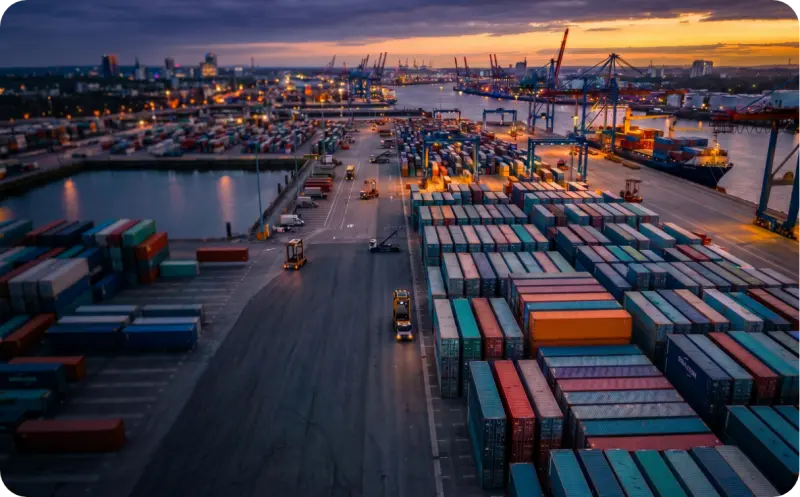
Import, export and transit declarations filed accurately and in a timely manner, including staged and project shipments.
Export Control & Sanctions
Support with screening, licence applications, compliance programme design and training, scoped to your products and markets.

Customs Control Tower
Plants, markets and brokers brought under one agreed operating model, with performance measured, one set of data and a single point of contact.
ALSO RELEVANT
More support for manufacturers.
SPECIAL PROCEDURES
Special procedures, where they suit your flows.
Special procedures can suspend or reduce duty, but only where your flows qualify and the right authorisations are in place. Inward processing can suspend duty on non-EU components used in goods you export. Outward processing can reduce duty on goods repaired or processed abroad. Temporary admission can give full or partial relief on equipment brought in for testing or projects. Our advisors assess which procedures fit your operations and whether they pay off, and where they do, we apply for the authorisations and help you run them.
"By offering a clear point of contact and simplifying the reporting process, Gaston Schul not only reduced the administrative burden but also strengthened our overall customs compliance."
Olav Langenberg, Office Manager, HFT Horren
FREE GUIDEs
Two guides for manufacturers.
Customs Licenses
How inward and outward processing, customs warehousing, end-use and temporary admission can defer or reduce the duty you pay.
Sanctions & Export Control Support
How to check dual-use status, screen buyers and destinations, and keep the evidence.
INSIGHTS
Insights for manufacturers.

Customs & Trade. Controlled.
Gaston Schul does more than clear your components. We connect it all and run it as one. That is what one full-service operating model gives you, across all your customs and trade in Europe: the clarity to see, the control to govern, and the confidence to decide.
GET IN TOUCH
From manufacturing customs questions to clear answers.
Tell us what you make, where your components come from and where your goods are shipped. An expert will talk through your clearance, procedures and export checks, and where they could work better. No obligation, just a clear answer from people who know customs.

GOOD TO KNOW
Customs for manufacturers: frequently asked questions

Yes. Gaston Schul has its own teams in 14 European markets, with an alliance network reaching further, all under one operating model. For manufacturers with several plants and brokers, our Customs Control Tower can coordinate them under an agreed operating model, so processes and data are consistent from site to site.
By agreeing the data and documents for each regular component flow up front, checking them before goods arrive, and fixing recurring errors at the source. Customs decides which goods it checks, but complete and accurate data is the best way to avoid holds.
It depends on whether the part is specific to the machine, suitable for general use, or makes the machine essentially complete. That decides the heading and the duty. We classify your machines and parts, record the reasoning and support applications for Binding Tariff Information where a ruling would help.
Possibly, with inward processing. If your flows qualify and the authorisation is granted, duty can be suspended on non-EU components used in goods you then export. We assess whether it suits your operations and pays off, and where it does, apply for the authorisation and help you run it.
The EU Carbon Border Adjustment Mechanism (CBAM) puts a carbon cost on certain iron, steel and aluminium goods, including some fasteners and parts. Importers above an annual threshold must be authorised declarants and pay for the embedded emissions, and the UK introduces its own CBAM from 2027. We check which imports are in scope and support you with the reporting and declarations.
By checking its technical specifications against the dual-use control lists, and screening the buyer, end use and destination. We can help with these checks, support licence applications and help you design a compliance programme, scoped to your products and markets.
Temporary admission can allow equipment to enter with full or partial relief from duty, depending on its use, as long as it leaves again within the agreed period. We help you choose the right route and handle the declarations.
By working out origin against the rule in each trade agreement, using your bill of materials and supplier declarations. We help with the calculations and the supplier evidence, so your origin statements can be supported if they are checked.