
New EU Melt and Pour requirements for steel imports from 1 October 2026.
- Freitag, September 25, 2026
- 3.5 Minuten Lesezeit
For businesses importing steel into the EU, this makes supplier documentation an important part of getting ready for the new requirements.
Here is what is changing, which evidence can be used and what importers should check before 1 October.
What is changing for EU steel imports?
Commission Implementing Regulation (EU) 2026/1963 sets out the evidence importers must provide to demonstrate the country of ‘melt and pour’ for steel products covered by Annex I of Regulation (EU) 2026/1384.
The requirements apply from 1 October 2026.
At the time of import into the EU, importers of products in scope must provide evidence showing:
- The country of melt and pour
- The heat number of the imported steel
Whether a particular steel product is affected depends on its classification. Importers should therefore check the relevant CN or TARIC code against Annex I of Regulation (EU) 2026/1384.
What does ‘country of melt and pour’ mean?
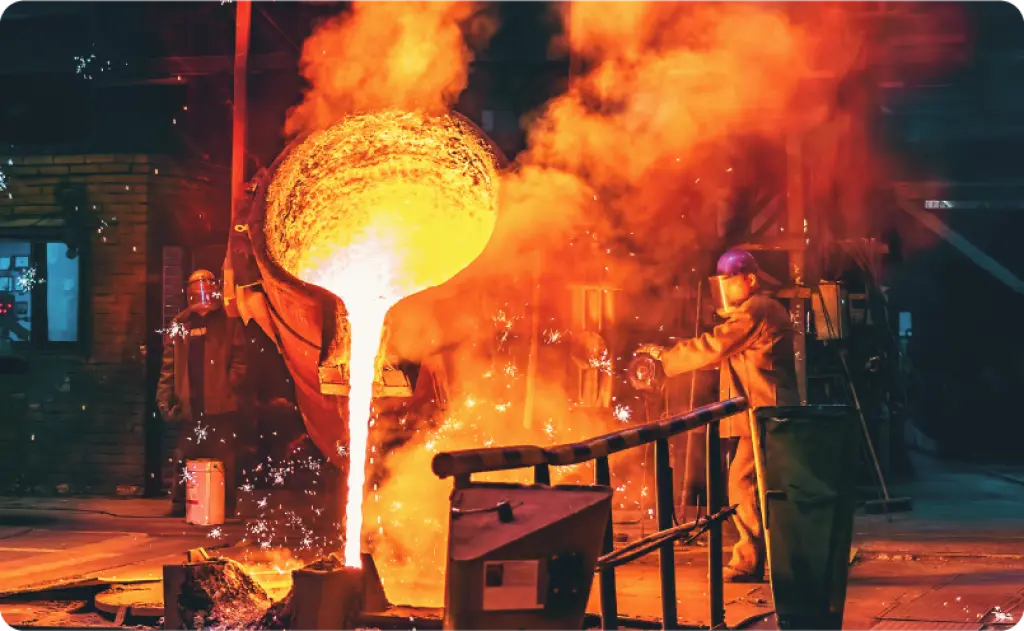
The country of melt and pour is the country where the raw steel or iron was initially produced in liquid form in a furnace and subsequently cast into its first solid state after melting.
This is important because it is not necessarily the same as the country from which the goods are exported, processed or purchased.
For example, an EU importer may purchase steel through a trader in Türkiye while the steel itself was originally melted and poured in India. Documentation identifying Türkiye as the exporting country would therefore not, by itself, establish the required melt-and-pour information.
What evidence will importers need?
The starting point under the new rules is the Mill Test Certificate (MTC). It should include both the country of melt and pour and the heat number.
However, the regulation also recognises situations where the MTC does not contain all the required information.
If an MTC is available but is missing either the country of melt and pour or the heat number, customs authorities may consider complementary evidence containing the missing information.
This can include invoices, delivery notes, quality certificates, relevant clauses in purchase orders or contracts, long-term supplier declarations, cost accounting and production documents, customs documents from the exporting country, commercial correspondence or production descriptions.
What if no Mill Test Certificate is available?
There is a temporary provision for situations where an MTC cannot be provided.
From 1 October 2026 until 30 September 2027, the alternative documents listed above may be considered by customs authorities as standalone evidence, provided they contain both the country of melt and pour and the heat number.
Where complementary or standalone evidence is used, customs authorities will carry out documentary checks on the information and supporting evidence submitted. This may delay customs clearance while the evidence is being verified.
This makes the distinction important: alternative documentation is possible, but it should not be treated as an automatic substitute for an MTC.
What happens if the required evidence is missing?
The country of melt and pour must be declared using the relevant TARIC document codes.
The regulation states that failure to declare the country of melt and pour with appropriate, verifiable evidence will result in the import being rejected.
For importers, the practical challenge is therefore not only knowing whether a product is in scope. The required information also needs to be available, verifiable and connected to the goods being imported.
What should steel importers do before 1 October?
With the new requirements approaching, importers should review their affected products and supply chains now.
A practical starting point is to:
- Check your product scope. Review the CN or TARIC codes of the steel products you import against Annex I of Regulation (EU) 2026/1384.
- Review your supplier documentation. Check whether existing Mill Test Certificates contain both the country of melt and pour and the relevant heat number.
- Test the evidence before shipment. Obtain sample documentation from suppliers and identify any information gaps early.
- Connect the evidence to the goods. Make sure heat numbers and supporting documents can be linked to the relevant goods and customs declaration.
- Align suppliers and customs representatives. Make clear what information needs to be available and when.
- Update purchasing requirements where needed. Build the documentation requirement into the purchasing process so evidence is obtained before goods are shipped.
This may be particularly important in indirect supply chains where an importer buys through a trader rather than directly from the steel mill. Mixed batches, multiple heat numbers and consolidated shipments can also make the documentation chain more complex.
How Gaston Schul can help
If you import steel into the EU and are unsure how the new requirements affect your products or supply chain, Gaston Schul can help you assess your readiness.
We can support you in identifying affected products and import flows, reviewing existing evidence and assessing supplier readiness. Where gaps are identified, we can also help define the information required from suppliers and establish practical pre-import controls.
Not sure whether your steel imports are ready for 1 October? Speak to our customs and trade specialists to review your products, documentation and import process before the new requirements take effect.
Frequently asked questions about EU Melt and Pour requirements
The new requirements apply from 1 October 2026 to steel products covered by Annex I of Regulation (EU) 2026/1384.
The Mill Test Certificate (MTC) should contain the country of Melt and Pour and the heat number of the imported steel.
If the MTC does not contain either the country of Melt and Pour or the heat number, customs authorities may consider specified complementary documents containing the missing information.
Until 30 September 2027, specified alternative documents may be considered as standalone evidence if no MTC can be provided, provided they contain both the country of Melt and Pour and the heat number. Where complementary or standalone evidence is used, customs authorities will carry out documentary checks, which may delay customs clearance.
The country of Melt and Pour must be declared with appropriate, verifiable evidence. If this requirement is not met, the regulation provides for the import to be rejected.